




Reducing Administrative Burden with AI Tools
CoverMyMeds’ central fill services allow pharmacists to spend more time with patients, cut costs and minimize medication mistakes.
Read time: 3.5 minutes
It’s no secret the COVID-19 pandemic has changed the way patients interact with their pharmacies.
There have been fewer face-to-face interactions, greater use of telehealth services, and an increased focus on convenience – like contactless healthcare, digital pharmacies and mail-order prescriptions. Through it all, medication access and adherence remain a critical component for patients, while pharmacies face greater pressure to fill prescriptions for these various services.
McKesson’s goal is to get patients the best care in the fastest, safest and most reliable way possible. One of the ways we’re doing that is through solutions that enable a variety of central fill opportunities.
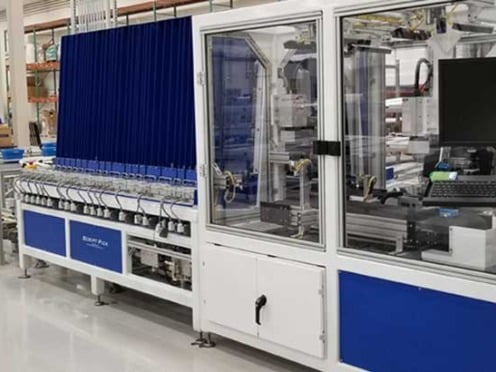
The central fill systems provided by CoverMyMeds, a McKesson business, are centralized facilities where medicine is dispensed utilizing cutting-edge automation technology and intelligent pharmacy control software that enables efficient and safe prescription fulfillment. Once filled, the prescriptions are then verified and shipped directly to patients or their local pharmacies for pick up.
Melanie Christie
Ultimately, this enables pharmacists to spend more time doing what they’re trained to do: help patients.
“Our central fill offerings are helping provide better medication access, adherence and convenience for patients — wherever they are, whenever they need it,” says Melanie Christie, vice president of portfolio management for CoverMyMeds. “These offerings support the entire pharmacy ecosystem, from big retail pharmacies to small and independent community pharmacies. They provide a flexible model that brings value to pharmacies and their patients, and does so safely, more quickly and more reliably.”
Adherence and Safety Are Critical to Patient Care
In general, medication adherence rates are low; only about 50% of patients take drugs exactly as prescribed, a particularly important data point to monitor as the aging population continues to grow and medication regimens become increasingly complex. Over the course of a given year, the majority of people ages 65-79 will need 20 different prescriptions filled, according to research from Georgetown University.
“The average Baby Boomer might be on 8-10 medications at a time,” Christie explains. “What’s more, many of these medications overlap, which makes side effects and interactions more likely.”
Fortunately, convenient access through central fill solutions can translate to better medication adherence and, in turn, improved patient outcomes.
“We’re trying to eliminate some of these barriers to adherence,” Christie adds. “The central fill systems we offer include the ability to mail prescriptions directly to a patient’s home, which can help them stick with medications. Otherwise, they’re more apt to have a gap in medication after they run out.”
Additionally, these solutions are managed by Sanitas®, our best-in-class pharmacy control software that leverages advanced routing algorithms to enable prescription fulfillment that’s not only the most efficient, but that’s also highly safe and accurate.
“Our equipment is 99.9% accurate through robotic filling,” Christie says. “There are several safety measures in our systems such as cameras, scales, barcodes and RFID technology to ensure accuracy. The goal is always right patient, right medication, and right dosage.”
Our central fill offerings are helping provide better medication access, adherence and convenience for patients — wherever they are, whenever they need it
Affordable Prescription Fulfillment
Efficiency and safety aren’t the only benefits central fill solutions provide pharmacies. While automated dispensing is nothing new, pharmacies using central fill have traditionally had to pay upfront capital costs and ongoing fees for equipment, staffing and medication inventory, which has prevented many smaller and independent pharmacies from benefiting from these services that larger retail pharmacy chains have enjoyed for decades.
Today, small and medium-sized pharmacies that might otherwise deem central fill unaffordable can also enjoy the benefits of central fill. Pharmacies simply pay per prescription so they can decide which prescriptions to fill in-store and which to outsource to the central facility – a process that can also save pharmacies money.
Industry-Leading Expertise
We offer a few unique advantages to central fill automation services.
Not only do we provide the robotics – in fact, we have a manufacturing and engineering facility where we actually build the robots – but we also bring decades of experience in this space.
“We’ve spent 35 years innovating and providing a variety of solutions to pharmacies that allow them to leverage both McKesson and CoverMyMeds’ scale and pharmacy-specific expertise,” Christie explains. “Our teams know pharmacy modeling inside and out, and our customers can trust us to set up their central fill systems in a way that’s not only right for them and enables them to grow and scale, but that ultimately positions them to meet the ever-changing needs of patients today.”


